A patient sits through a forty-minute treatment consult. They mention cold sensitivity on the upper left, a bad experience with a previous root canal, anxiety about sedation, and concern about cost. The dentist explains options, sequencing, and why waiting six months changes the prognosis. A week later the patient calls back. Most of that conversation is gone.
This is the hidden documentation problem in dentistry. Treatment decisions are shaped by narrative context, not just radiographs and codes. If the story does not survive the consult, the next conversation starts from scratch — and starts from a weaker position, because the patient knows they already said it.
The Problem
Dental practices do not lose cases because they forget the procedure code. They lose cases because the reasoning around the treatment plan disappears. A patient says the pain only happens when chewing on one side. They mention that a crown from another office never felt right. They reveal that they can only come in on Fridays, or that insurance resets next month. Those details shape diagnosis, case acceptance, scheduling, and follow-through. None of them are billable on their own, which is precisely why they slip through the documentation net.
The chart usually captures the outcome, not the conversation. The note may say "discussed crown vs extraction" or "reviewed endo referral," but it rarely preserves the patient's wording, the objections raised, or the exact explanation that earned trust. When the front desk follows up, when a partner dentist sees the patient, or when the patient returns three months later, the team has the plan but not the context behind the plan. That gap is where cases stall.
The cost is not just administrative. It shows up in delayed acceptance, repeated chairside explanations, confused handoffs, and avoidable treatment drop-off. A practice can have the right diagnosis and still lose the case because the trust-building conversation was never preserved for the next touchpoint. Patients who feel that every call starts with "can you remind me what we discussed" eventually stop calling back.
In multi-provider practices, that gap gets worse. Hygienists, treatment coordinators, general dentists, and specialists each hear different pieces of the story. The hygienist hears about the grinding. The treatment coordinator hears about the financing timeline. The dentist hears about the prior dental trauma. Without a reliable conversation record, those signals stay trapped in separate memories — and by the time the patient returns, the practice is reconstructing its own notes from a chart that never held them in the first place.
Why Current Solutions Fail
Most practices already have tools that touch part of this problem. None of them solve it.
- Practice management systems are built for billing and charting. Platforms like Dentrix, Eaglesoft, and Open Dental store CDT codes, appointments, and clinical notes well, but they do not preserve the nuance of a treatment discussion. The perio chart, the restorative plan, and the claim go in cleanly. The reason the patient hesitated about the implant does not.
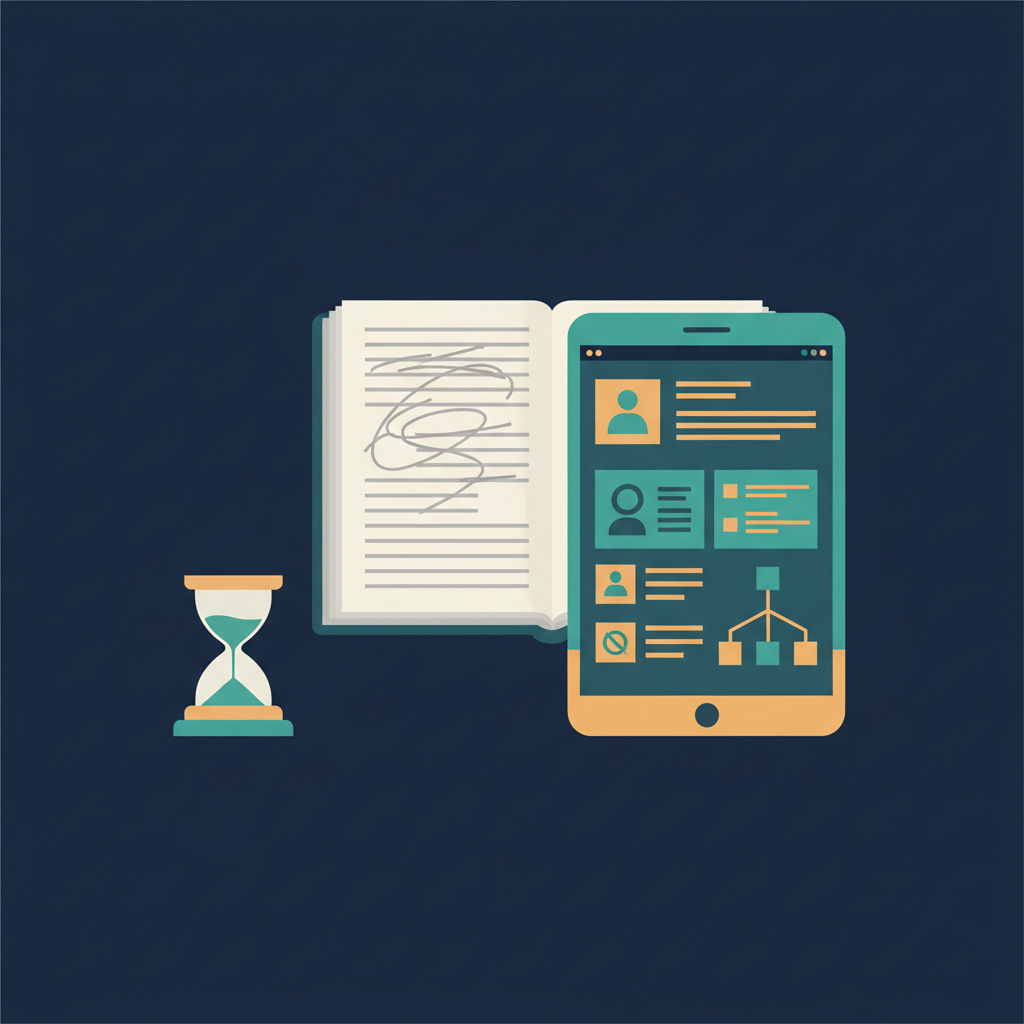
- Manual notes compress too aggressively. Under schedule pressure, clinicians write the shortest defensible summary, not the full patient narrative. A ten-minute conversation becomes three lines. Whatever nuance did not make it into the typed line is gone the moment the next patient is seated.
- Generic dictation tools struggle with dental language. Terms like occlusal guard, peri-implantitis, bitewing, endodontic retreatment, cervical abfraction, and bruxism often come back wrong from general-purpose speech tools, forcing the clinician to rework the note instead of trusting it. When the transcript is unreliable on the terms that matter, no one uses it.
- Hand-offs break continuity. The person doing follow-up usually was not in the room, so hesitation signals and consent questions never make it to the next step. The treatment coordinator calls with a generic script and hears "let me think about it" — not because the patient changed their mind, but because nobody preserved the exact hook that landed during the consult.
- Intraoral photos and radiographs tell only part of the story. Imaging captures the clinical picture. It does not capture why the patient wants the anterior done before the posterior, or why they are willing to pay out of pocket for the zirconia but not the porcelain.
Most practices try to solve this with better templates or more disciplined note-writing. That helps at the margin, but it still depends on someone translating a rich conversation into a few lines before the next patient is seated. Under real operatory pressure, that translation is always lossy.
What Actually Works
Dental teams need a documentation layer that captures the consult as it happened and makes that context retrievable later — not another place to type, but a way to keep what was already said.
Accurate transcription for dental terminology
AmyNote uses OpenAI's latest Speech API, which handles fast clinical speech and specialized terms far better than generic voice notes. Shade matching, crown prep, distal decay, implant consult, and occlusal adjustment come through clearly enough to review instead of rewrite. The threshold matters: a transcript that needs constant correction is worse than no transcript at all. When the vocabulary is right, the clinician trusts it, and the trust is what turns a recording into a tool the team actually uses.
Speaker identification that reflects the real room
The system separates dentist, patient, spouse, assistant, or treatment coordinator. That matters when a patient agrees to treatment but the spouse raises financing concerns, or when the assistant documents postoperative instructions that the patient later says they never heard. In a room with four voices, knowing who said what is not a nice-to-have — it is the difference between a defensible record and a disputed one.
AI summaries and search that save the team a second conversation
Anthropic's Claude Opus can turn the consult into a structured summary: presenting complaint, treatment options discussed, patient objections, next step, and follow-up risk. Later, the office can search "wanted to wait until insurance renews" or "afraid of root canal" and recover the exact visit where that was said. That search is what closes the loop between the consult and the follow-up call: the coordinator walks into the call already knowing the patient's hesitation, not discovering it mid-sentence.
Privacy architecture that can survive scrutiny
Both OpenAI and Anthropic contractually guarantee zero training on user data. Audio is encrypted in transit; processing copies may be retained to deliver and recover requested features. Transcripts are stored locally on device with encrypted transport. Cloud processing copies are handled under the controls described in AmyNote’s Privacy Policy. For practices operating in jurisdictions with strict patient privacy requirements — and for the ones that simply do not want their recorded consults becoming somebody else's training set — this architecture is the difference between a tool that can be rolled out and one that cannot.
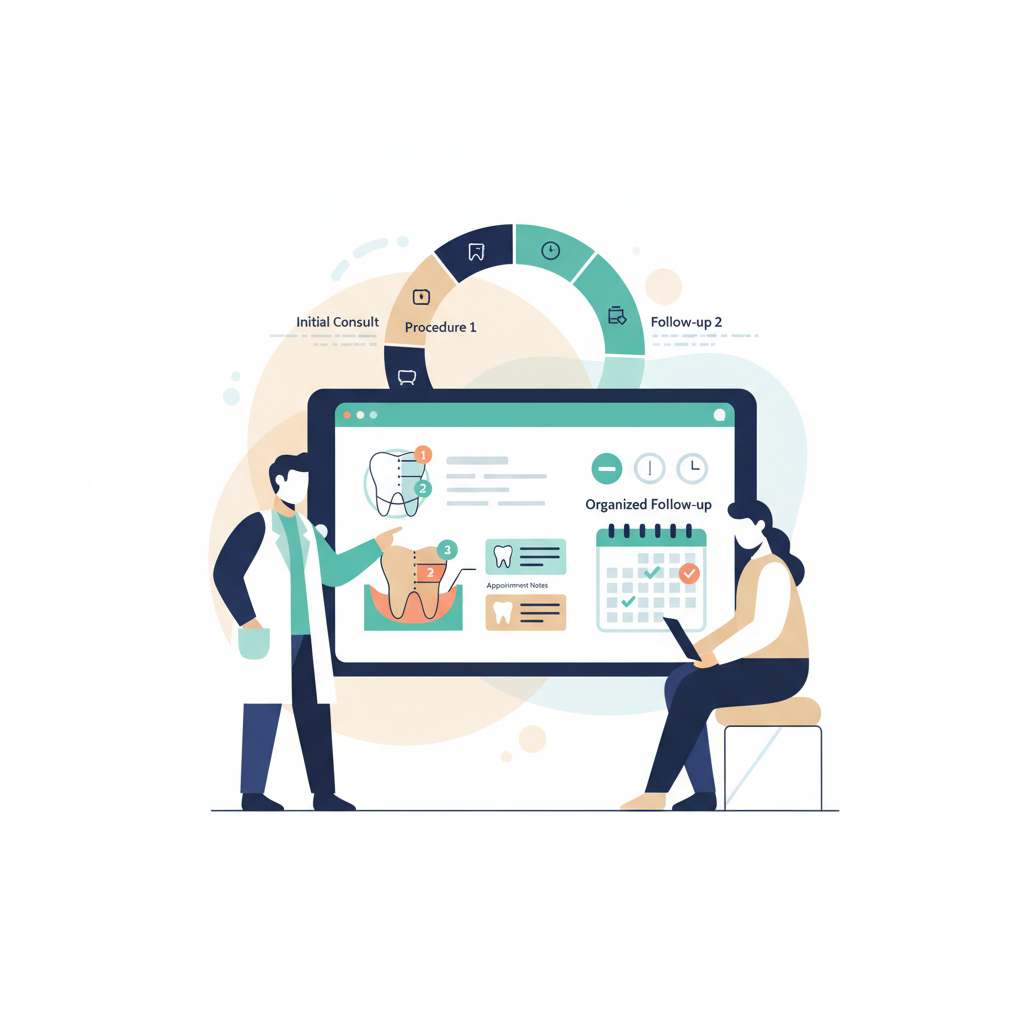
The result is a better operational memory for the whole practice. The dentist can reopen the exact explanation that landed with the patient. The treatment coordinator can follow up with context instead of a generic reminder. A specialist can review the full patient story instead of guessing from a compressed referral note. Nothing about the clinical workflow changes — the clinician still does the exam, still presents the plan, still answers the objections. What changes is that none of it has to be remembered.
Getting Started
The right way to evaluate this in dentistry is simple: run it during real treatment consults for one week. Three things to check.
- Does the transcript get the clinical terms right? Run a real consult with at least one restorative discussion, one implant or endo conversation, and one objection handled out loud. Read the transcript end to end. If you find yourself fixing more than a couple of lines, the tool is not ready for the operatory.
- Does the summary preserve objections accurately? The consult summary should capture not just the plan but the patient's specific hesitations — cost, timing, fear, prior experience. If those are missing, the follow-up call is back to guessing.
- Can the team use search to recover context during follow-up? Two weeks in, try to answer something the chart would have buried: "when did this patient first mention the clicking jaw" or "which crown did they say didn't feel right." The answer should take seconds, not scrolls.
The documentation gap is not a clinical failure. It is a tooling failure — and closing it is the difference between a case that accepts on the second call and one that quietly drops off the schedule.
AmyNote is built for exactly that workflow. Practices can start with a few consult-heavy operators, measure how much repeat explanation disappears, and decide whether a full-fidelity conversation record improves case acceptance and continuity. A 3-day free trial with no credit card is enough to know within a normal clinic day whether the tool fits how your team actually practices.
Try AmyNote at amynote.app. Transcription on OpenAI's latest Speech API, AI analysis on Anthropic's Claude Opus, contractual zero-training from both providers, 120+ languages, and transcripts stored locally on device.
Originally published as an X Article.